
This book is a time capsule.
It is of an era when gay life wasn’t part of the mainstream. The story is told by young American man, David, who is living in Paris during the 1950s, hanging around older homosexuals he criticises for being too effeminate.
While his girlfriend is in Spain, he begins an affair with young Italian man, Giovanni. David even moves into Giovanni’s bedsit and lives there for several months when eventually, his girlfriend visits him.
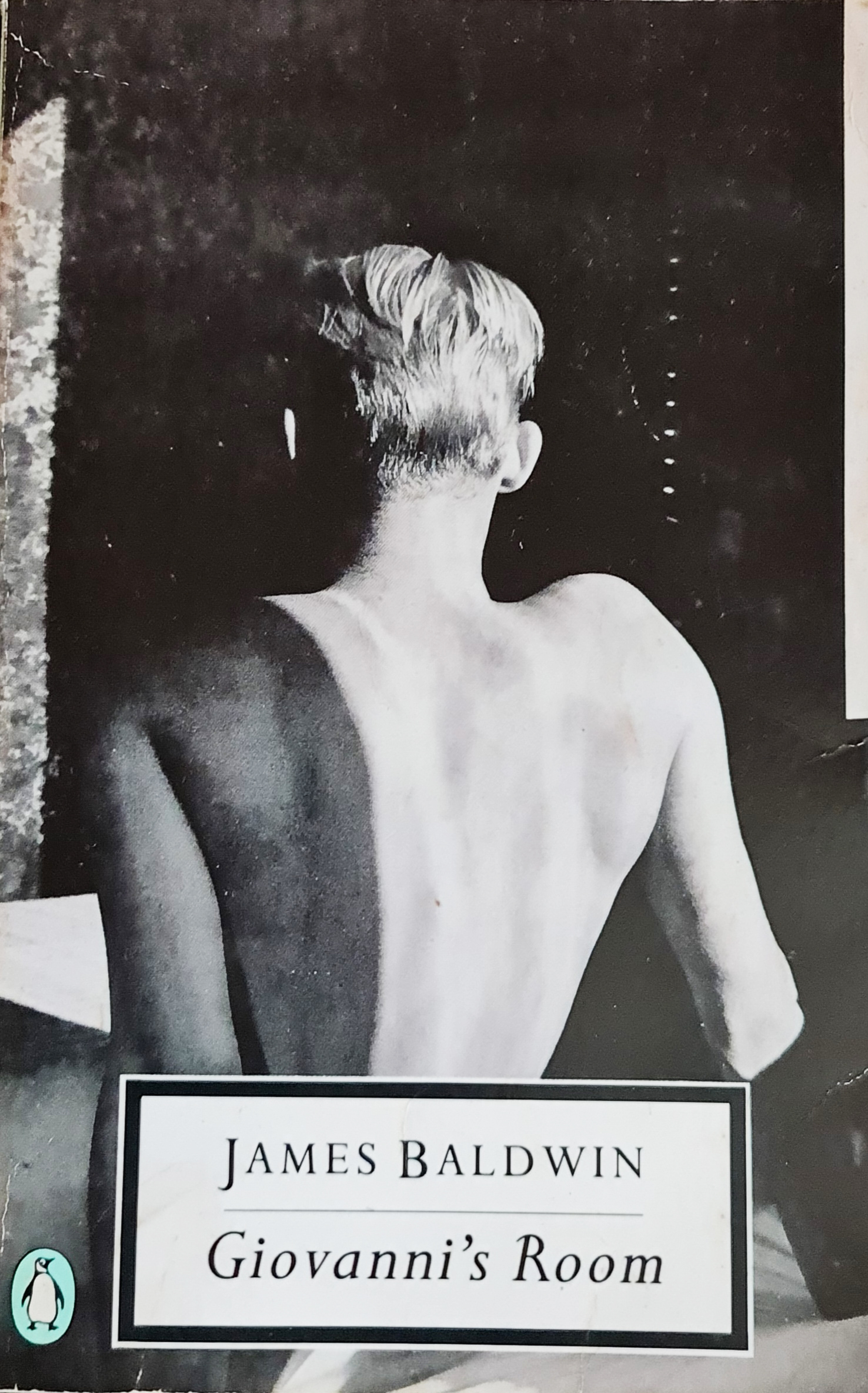
This is the perfect plot for a modern queer novel.
It’s an exploration of internalised homophobia from characters who lived in the past. But as this novel was published in 1956 (the same era it is set in), it skirts around these themes without delving right in. It is the drawback of being a contemporary novel trying to bring gay life out into the open at that time.
To be fair, the final scene and its conclusion did hit home for me. I’ve lived this life, trying to be straight for society’s (and my girlfriend’s) sake. But a lot of this novel irked me because I finally live in a time where these stories are told better, and of course, that’s not the novel’s fault.
It was groundbreaking back in the day.
Now we’ve all seen Brokeback Mountain, or the TV version of Fellow Travellers, both screen adaptations which show sex and homophobia more authentically. One of my favourite recent novels exploring internalised homophobia is Jonathan Kemp’s London Tryptich, a tale about three gay men. One lives in the late 19th century, another in the 1950s and another in the 1980s. It’s more satisfying because it was written recently.
Of course, Giovanni’s Room doesn’t contain a gay sex scene due to commercial tastes at the time. The relationship between David and Giovanni isn’t explored. It’s brushed over as the story suddenly jumps time to take us to David’s girlfriend’s return. Although I will admit, this is when the story grabbed me the most.
The novel is tragic.
It feeds into the 1950s narrative that to be a homosexual means having a tragic life, which is obviously done to appease the mainstream. But if this wasn’t one of its themes, it probably would never have been published at that time.
 kevin klehr