First off, the plot is perfect for a movie.
It lends itself much easier to a screen adaptation than Holden Sheppard’s other works – each dramatic cinematic beat is here. Two earlier scenes really resonated, setting up Jack Brolo’s low opinion of himself, and later, his state of mind returning to the town he grew up in. Both beautifully written.
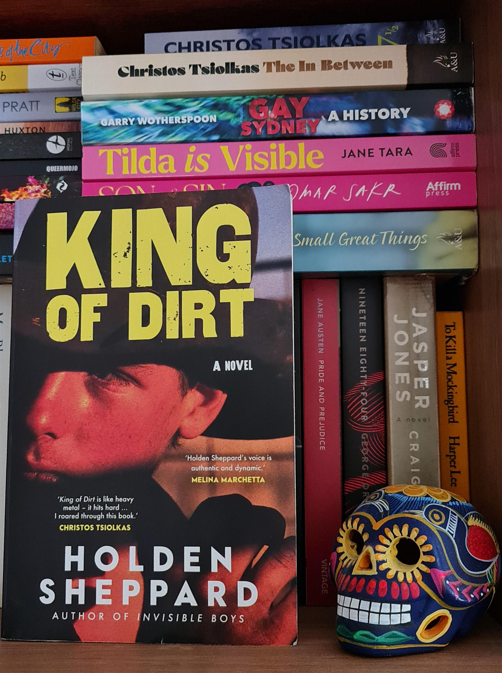
When Jack returns home, we meet his toxic family who have a lot to do with his internalised homophobia. In this first person narrative, Jack makes this point about his bullying brother:
Slamming woke shit is a part-time job for him, and generally goes down well with the rest of the family, who have varying degrees of passion or indifference for political or cultural news but a permanent appetite for outrage.
I read that passage twice as it perfectly encapsulates people we all know. The Brolos also reminded me of another family I knew with a different cultural bent, yet with a similar set of rules on how not to humiliate its members to those who are quick to judge. It sadly creates a culture where siblings tell on each other, trying to keep in their parents’ good books, never having the freedom to grow and mature.
This is the struggle Jack Brolo has to deal with, and this visit home leads to many interesting revelations where his own state of mind stops him from both confronting people, and seeing the silver linings.
We had lunch with someone who had finished this book way before I did. He made a point about the large number of sex scenes in the story, which now that I’ve read it, I disagree. In an ‘in conversation’ with the author it was revealed there were many more in an earlier draft.
It was only after I finished the novel, I understood their significance.
These scenes are mostly in the first half of the book and explore Jack’s right of passage. He puts up with unsatisfactory sexual encounters until his luck changes, finally accepting he deserves better in the bedroom. It’s an early spark of self-acceptance, and an important one.
All Holden Sheppard’s novels are page turners, and although we may not all connect with the blokey main character at first, it’s his self-reflective musings which invite us in, understanding there is a deep level of unresolved pain – because all he wants are deeper human connections.
 kevin klehr