The Japanese have a beautiful culture.
It’s polite and reflective. It sometimes takes on kooky elements. All of which are found in Kawaguchi’s novella, Before the Coffee Gets Cold.
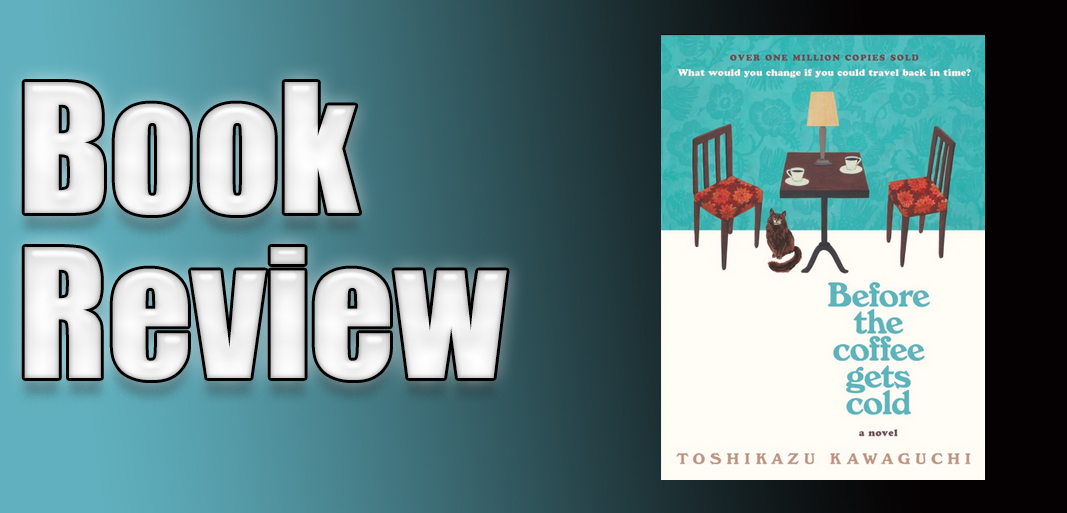
There’s a cafe where a ghost sits in the same seat every day, reading. When she needs to go to the toilet (did I mention kooky?), other patrons take her seat for a chance to revisit the past. They can’t leave the seat they’re in so they can only meet up with people who are in the cafe that day. Plus, whatever happens as they turn back the clock, never changes the present.
And they must return before their coffee goes cold.
We get to know the staff and some of the regulars in the four short stories contained in this book. My favourite is Husband and Wife, where a woman goes back to meet her husband in order to find out the contents of a letter she never accepted when he first tried to give it to her. She suspects it was a love letter.
Each tale is about a different relationship between two people, all heartfelt, all endearing. The problem is, the English translation makes it hard to enjoy this book. Everything is explained – told rather than shown. There is no gentle prose to match the intention of these stories.
There are odd sentences like:
For some reason, unbeknownst to everyone, the woman in the dress was continuing to stare at Kei.
And:
Since becoming pregnant, whenever she was free, Kei would talk to the baby.
At another point, two consecutive sentences meant the same thing. This made it hard to enjoy this work, and at one stage I thought it was translated by AI. There is no translator credited in the paperback, but if you ask Google, it tells you who he is.
I know the Japanese language has a different structure.
I remember some of it from high school. But I often had to reread paragraphs in this book because my mind tuned out. This was a real shame.
The characters just became names with occupations, or they had some other reason to be in the text. I have no real connection to who they are because, I don’t do well with over explained narratives. I need to be shown so I can use my own imagination.
So this caused a dilemma.
While I couldn’t immerse myself in the storytelling, I did love the second the fourth tales. If this was made into a movie, it could work as this originally was a play. This may be why much of the action sounded like stage direction.
Three stars.
 kevin klehr