I’ve been presenting a project set in the 90s, scene by scene, to my writing group each week. This has sparked many memories back to a time when being social meant seeing people face to face.
One of my colleagues mentioned dinner parties.
I noted how sharing meals at someone’s house meant we had time to talk, open our minds and discover a different take on an issue dear to us.
Several weeks ago a friend of a friend sprouted some idiotic conspiracy theory which would need a rewrite of history to be true. Both me and the person who invited him, cringed.
He then said, “I should get off my high horse.”
I replied, “Feel free to stay on your high horse.” I said this smiling, in a friendly tone.
He murmured quietly, “Don’t patronise me, Kevin.”
This guy is in his early 70s. He grew up in an era of investigative journalism and critical thinking, yet here he was, lacking in common sense. This individual has often made snide remarks about what he assumes I think, looking for an argument which doesn’t exist.
But I believe only the ignorant invent their enemies.
You often see this with keyboard warriors who tap away looking for a fight, and stupidly believe that when people stop replying, their views are validated. And they often claim victory when they use nonsensical words like woke, while complaining if a media organisation doesn’t reflect their views, yet that’s not what a news service is for.
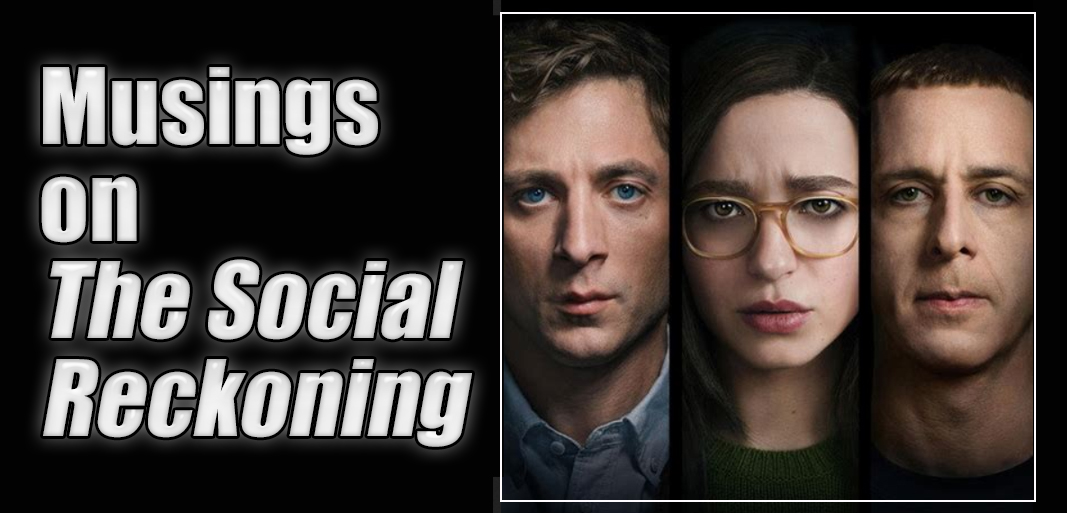
A lot of this came to mind while watching The Social Reckoning which follows the true story of Frances Haugen who, with the help of journalist Jeff Horwitz, came to understand how Facebook’s new algorithms brainwash and radicalise users. The movie starts with a scene featuring a Karen who provokes two police officers who’ve come to assist her. She broadcasts live, spouting abuse, which leads to her arrest.
If I say more about the film, I’ll spoil it for those yet to see it.
The movie makes several points along the way, giving us its main message at the end as everything which has come before provides context. But I can reveal that Jeremy Strong makes an excellent Mark Zuckerberg.
When I headed a workshop about creating dystopian narratives from today’s headlines, I played an interview from an ex-Facebook employee who warned about their algorithms. He understood social media’s anti-social outcomes and did not let his kids near it.
Someone in my class immediately criticised him, pointing out it gives shy people a chance to be social. While they had a point, I was taken aback by their instant condemnation of someone who spoke from experience. It didn’t align with their point of view, so they felt no debate was needed. And they felt no desire to defend their position when really, they needed to. Stating Facebook is good for shy people wasn’t a counter argument to the dangers the ex-worker warned about.
Sound familiar?
If you’re like me and most of my friends, you don’t spend much time online. And more and more we run into people, many who lived life before the internet, who have reduced their basic thinking to one view or another. Black or white. Or a zero or a one, like an algorithm.
And some news services know this, so they feed those people what they want to hear, further disassociating them from reality. They avoid important stories, yet those same networks would have run those reports decades ago, keeping their audiences informed.
I couldn’t believe the Channel 7 4pm bulletin rushed the world news.
They even had a 90 second stopwatch in the top corner of the screen as if to say, “Don’t worry. It will be over soon.” These news items are important for Australian audiences in order to understand the bigger picture, and how these events relate to us. But Channel 7’s search for never-ending mediocre local stories meant there was no reason to keep us informed.
We currently have politicians who want to get rid of our eSafety Commissioner. The very person who is trying to stop us being as divided as America, even while she is citing respected research on the effect of social platforms on people’s wellbeing, including children and teens.
The irony is, some of those politicians criticise what’s happened to the US, yet don’t join the dots.
The Social Reckoning is an important film for all to see. The sad thing is, unlike The Social Network many years ago which was a huge hit, those who need to see this latest movie, won’t. And sadly, if they did, I fear it would go over their heads.

